Four Segments of Outsourcing & Top Ecommerce Development Companies in Vietnam
Here, we briefly explain the reasons why modern businesses choose Vietnam for ecommerce development services, break down four key segments of outsourcing, and highlight three leading service providers based in Vietnam.

Content Map
More chaptersInstead of one long, random list, our article explains the main reasons why choose Vietnam as a hub for ecommerce development outsourcing services, four segments of service providers, and the top three best ecommerce developers to consider in Vietnam.
Key Takeaways:
Vietnam is more than a low-cost option for ecommerce development outsourcing. It combines a fast-growing local ecommerce market, deep tech talent, and a mature vendor ecosystem.
There is no single “best” vendor – four main segments serve different needs:
- Platform-centric digital commerce agencies for building on established platforms
- Shopify & DTC specialists for fast, brand-led growth on Shopify
- Extension & migration tool vendors for specialized add-ons and safe replatforming
- Custom software development partners for highly tailored, integrated commerce ecosystems
Choosing the right segment matters more than chasing rankings – once you know your platform, business model, and complexity, you can shortlist the right ecommerce development partner that truly fits your goals. Here, we recommend three top ecommerce development companies for your consideration.
Why Choose Vietnam for Ecommerce Development Outsourcing
Vietnam used to be known as a “low-cost alternative” on the international outsourcing map, but that was a story of years ago. The “S-shaped” country has now become one of Asia’s most appealing destinations for software development services and tech talent, gaining traction from businesses based in global hubs like New York (USA), Tokyo (Japan), or Beijing (China).
Vietnam’s ascent is driven by a rare combination of market momentum, deep tech talent, and business-friendly conditions. Let’s uncover what truly fuels Vietnam’s rise as a tech hub, not just for ecommerce development but for a wide range of software services.
Local Market Potential & Industry Insights
Vietnam is not just exporting ecommerce development services with little understanding of the domain. The country is a fast-growing ecommerce market in its own right, surrounded by marketplaces, social commerce, live shopping, and aggressive online campaigns.
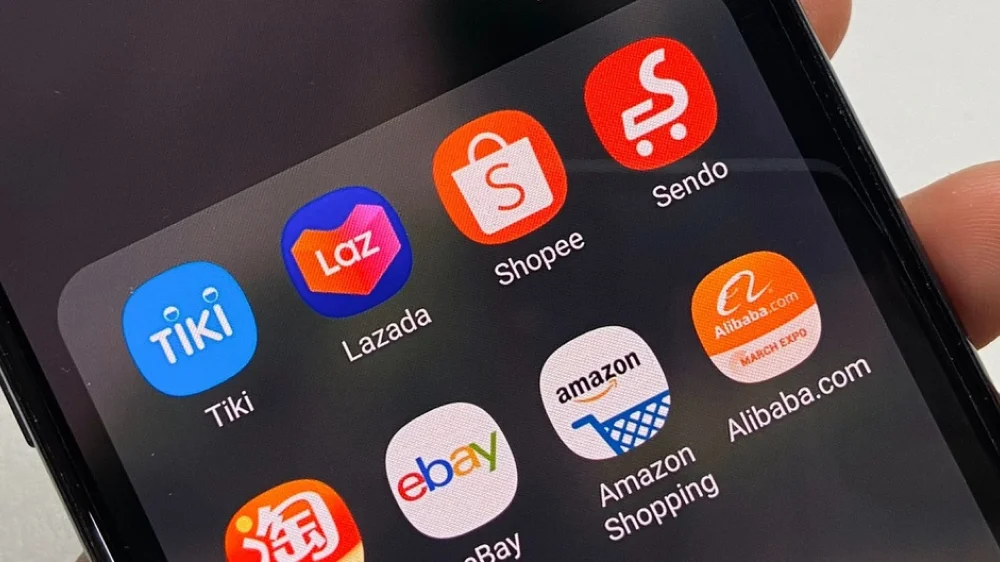
For development teams, this is not theory; it’s the environment their friends, families, and clients operate in every day. With consumer behaviors in mind, the local teams and companies build on top of real experience and accumulate practical industry insights, not just technical knowledge. So, they understand the patterns, expectations, and pain points that ecommerce businesses and online stores face. The local teams and companies build on top of firsthand experience and accumulate practical industry insights, not just technical knowledge. They intensely understand the patterns, expectations, and pain points that ecommerce businesses and online stores face. So, they are capable of delivering tailored solutions that solve your challenges.
For companies outsourcing ecommerce development to Vietnam, you are engaging teams who build from within a live, demanding ecommerce ecosystem and bring that context into your project.
Deep Tech Talent & a Mature Software Development Ecosystem
The “people” factor is the most impactful differentiator that helps Vietnam stand out and rise as Asia’s outsourcing powerhouse across various industries, including e-commerce.
The country itself is home to a large pool of young tech talent who have grown up with cutting-edge technology innovations. They are comfortable with modern web stacks, cloud platforms, and mobile-first user experiences. Many of them specialize in popular ecommerce tech stacks (E.g., JavaScript frameworks, microservices, APIs, headless commerce architectures), store development platforms, and enterprise suites (Such as Salesforce Commerce Cloud or SAP Commerce).

Furthermore, Vietnam has a mature vendor landscape powered by a dense network of software development companies, product agencies, and specialized ecommerce agencies. These service providers often collaborate with each other and with global partners, forming an ecosystem where best practices, platform know-how, and domain expertise are shared and refined over time.
Established firms typically operate with clear delivery frameworks, documented processes, and formal quality standards, often backed by certifications such as ISO 9001 and ISO 27001. For ecommerce clients, that translates into disciplined engineering practices. When collaborating with a service vendor in Vietnam, you are not just hiring some developers; you are plugging into a collaboration that enables shipping and maintaining production systems at scale.
Cost-Effectiveness & Value for Money
Vietnam is often described as a “cost-effective” destination; however, it never means “cheap.” And outsourcing should never be only about price-cutting or getting low-cost developers.
In this regard, Vietnam shines because its true competitive edge lies not only in lower hourly rates but also in the ratio between what clients pay and what they are able to receive and sustain over time. In other words, maximizing ROIs for a given budget is the real advantage here.
The development rates in Vietnam are typically lower 50% - 70% compared to hiring in North America, Western Europe, or some neighboring tech hubs. This country allows you to assemble a more complete, multidisciplinary team of skilled talent without overspending or sacrificing performance or innovation.

Especially in e-commerce development, where you rarely need just developers but often require a combination of skills around online store development, integrations, search engine optimization (SEO), performance tuning, and analytics. In practice, the same budget that might cover one or two senior engineers in a high-cost market can often support a blended team in Vietnam that includes developers, QA engineers, and sometimes dedicated roles for tasks you need.
Moreover, e-commerce projects are not often one-off builds; they demand ongoing optimization. Vietnamese service providers are generally comfortable with agile, long-term engagements (E.g., dedicated teams, monthly retainers, or hybrid models), which makes it easier to keep enhancing your online store or ecommerce website over time.
Different Types of E-Commerce Development Outsourcing Partners
In reality, there is no single “best” ecommerce development company. Different types of partners excel at different services, delivering projects exactly as specified.
Segment #1: Platform-Centric Digital Commerce Agencies

Technical Expertise
Companies under this category operate around deep expertise in one or more mainstream e-commerce development platforms rather than purely custom stacks.
They specialize in building and scaling online stores on established ecommerce platforms, such as Shopify, Magento (Adobe Commerce), WooCommerce, or BigCommerce.

They provide full-stack capabilities around the chosen ecommerce platform and based on business requirements: Front-end theming and headless storefront development, back-end extension and module development, API integrations, and data modeling for catalogs, promotions, and customer accounts.
Key Services Offered

These platform-oriented agencies cover the full lifecycle of an ecommerce project.
- Platform Selection & Solution Consulting: Assess your business model, catalog complexity, customer journeys, and operational constraints, then translate this into a practical platform strategy and recommend the right ecommerce platform and architecture.
- Storefront Design & Implementation: Involve UI/UX design, theme development, customization of storefronts, or headless front ends.
- Store Setup & Configuration: Set up product catalogs, pricing, promotions, checkout flows, shipping options, taxes, etc., so the ecommerce store is ready for real customers.
- Custom Features & Extensions: Build or recommend custom modules, apps, or plugins when the standard platform features are not enough or are unable to match specific business needs.
- System Integration: Connect the ecommerce platform with ERP, CRM, PIM, OMS, payment gateways, shipping providers, and digital marketing tools.
- Data Migration: Migrate products, customer data, and orders from legacy systems or other platforms. The service provider cleans and transforms data as needed, runs test migrations, and minimizes downtime and risk during cutover.
- Performance, Security, & SEO Optimization: A full-service digital agency can tune site speed, harden security, and implement technical SEO best practices for performance optimization.
- Ongoing Support, Maintenance, & Feature Enhancement: Apply platform updates, fix issues, add new features, and support campaigns post-go-live to keep an ecommerce channel evolving with the business.
When to Choose This Type of Partner
You should choose a platform-centric agency when you simply want to build or upgrade an online store on a proven ecommerce platform rather than commission a fully bespoke system. Instead of creating everything from scratch, players in this segment leverage available ecosystems of ecommerce platforms, such as Shopify or Wix, to match each client’s business requirements.
For that approach, they become ideal for those companies that lack in-house ecommerce architecture expertise and require guidance as well as execution. For international e-commerce businesses (Retailers, brands, and DTC companies) outsourcing to Vietnam, platform-centric agencies work well when you want one vendor to handle initial builds and, if needed, continue with ongoing support and enhancements.
Segment #2: Shopify & Direct-to-Consumer (DTC) Specialists

Technical Expertise
We can simply refer to them as Shopify development partners. They are deep platform specialists that build and grow ecommerce businesses on Shopify and Shopify Plus. Unlike broad, multi-platform agencies, these providers are tightly focused on direct-to-consumer ecommerce. They know just how to implement Shopify and how to use it to drive conversion, average order value (AOV), and customer lifetime value for modern DTC brands.

Shopify and DTC specialists sit at the intersection of product, brand, and platform rather than purely IT delivery like software development outsourcing companies. They have deep platform knowledge and hands-on experience with:
- Shopify & Shopify Plus: Shopify theme development, Liquid templating, Online Store 2.0, app configuration, and theme performance optimization.
- Shopify Apps & Ecosystem: They know which apps to use for subscriptions, reviews, loyalty, bundles, cross-sell, and which ones to avoid for speed or compatibility reasons.
- Custom Features on Top of Shopify: Tailored product configurators, B2B features, multi-language/multi-currency support, or custom checkout logic (within Shopify’s constraints).
Key Services Offered

Shopify and DTC specialists are not generic dev shops that also do Shopify; they act as growth-oriented implementation partners.
- Initial Shopify Store Setup & Design: Help new merchants build new Shopify or Shopify Plus stores.
- Storefront Redesign & Migration: Redesign existing stores or move from a different platform into Shopify/Shopify Plus with minimal disruption, while cleaning up SEO, catalogs, and data.
- Theme Customization: The outsourced team adjusts or extends Shopify themes and builds custom sections, templates, and components to support unique brand storytelling and merchandising tactics.
- Custom Apps & Integration: Build private apps and integrate Shopify stores with ERP, CRM, OMS, PIM, payment gateways, logistics providers, marketplaces, and content marketing tools.
- Conversion Rate Optimization (CRO): Analyze store performance and run CRO experiments to enhance user experience, add-to-cart rates, checkout completion, average order value, and repeat purchase behavior. This is conducted in close collaboration with a marketing team in order to drive significant revenue growth from current traffic.
- DTC Feature Implementation: Set up and configure DTC-critical features like subscriptions, product bundles, upsells and cross-sells, loyalty programs, referral flows, and post-purchase offers using apps or custom development.
- Ongoing Maintenance & Growth Support: Maintain and evolve the Shopify store, handle technical updates, refine flows, roll out new features, and support new product drops or seasonal campaigns.
When to Choose This Type of Partner
This is the segment to look at first when you choose Shopify as your primary e-commerce platform, or your digital strategy is centered on a DTC brand model. If your priority is to launch your store quickly, tell a strong brand story, and continuously optimize revenue, a Shopify & DTC specialist will usually outperform more generic development partners.
Segment #3: Extension & Migration Tool Vendors

Technical Expertise
These service providers are known as product-first companies. They specialize in building ready-made extensions, connectors, themes, and automated migration tools for e-commerce platforms, often starting with Magento development, but also for Shopify, WooCommerce, BigCommerce, etc.

Unlike those service companies in segment one and segment two, extension and migration vendors usually don’t own your entire ecommerce project or work with individual stores. At the framework level, such vendors create reusable components and tools that merchants and agencies can rely on. Business owners plug tools and expertise offered by these vendors into their stack to solve specific pain points.
Since extension and migration tool vendors operate so close to the core logic and extension mechanism of these platforms, they tend to build up strong knowledge of:
- Platform Internals: Deep understanding of how platforms like Magento/Adobe Commerce (and often Shopify, WooCommerce, etc.) are structured under the hood: Data models, APIs, events, and extension points.
- Extensions & Modules: Designing, coding, and maintaining a wide range of extensions that add or enhance features such as checkout flows, B2B capabilities, SEO, layered navigation, payment and shipping methods, loyalty and rewards, or admin productivity.
- Complex Business Logic: Implementing and optimizing advanced scenarios inside these extensions: B2B ordering rules, price tiers, multi-vendor/marketplace flows, inventory and multi-warehouse management, and sophisticated promotion engines.
- Migration Engines & Tooling: Building automated tools that can safely move products, customers, orders, URLs, and SEO data between many different ecommerce platforms, with attention to data mapping, integrity, and rollback strategies.
Key Services Offered

- Off-the-Shelf Extensions, Connectors, & Add-Ons: The service providers develop and sell ready-made solutions, plugins, or apps that can be installed on your ecommerce platform to quickly add new functionality. For example, payments, shipping, promotions, search, connectors, etc.
- Extension Implementation & Customization: Vendors help with installing, configuring, and tailoring their own products and modules to match a store’s specific business rules and workflows.
- Replatforming & Data Migration Services: Handle the end-to-end migration process, from planning test runs, cleaning data, executing the final cutover, and verifying that products, customer data, and orders have been migrated correctly from one platform or version to another.
- Maintenance & Compatibility Updates: Provide ongoing support and update extensions and tools as platforms evolve, issuing patches and new versions so your integrations keep functioning well after upgrades.
When to Choose This Type of Partner
This segment works best for those e-commerce businesses that already have a main e-commerce agency or in-house dev team, but need a specialized provider for extensions, connectors, or migration tooling. Or, you need specific, advanced capabilities, such as B2B features, marketplace, complex promotions, SEO enhancements, and reporting.
Segment #4: Custom Software Development Partners

Technical Expertise
Companies under this segment are engineering-focused teams. They build e-commerce and surrounding systems from the ground up or on a highly tailored architecture. Instead of relying on off-the-shelf platforms, business owners can collaborate with custom builders to engineer tailored solutions across web, mobile, backend systems, data, and cloud.

Typically, a custom ecommerce development agency is strong in:
- Platform Expertise and Architecture: They design how your entire commerce engine should look and function and shape the overall architecture around your business model. They understand when to use an existing commerce platform, when to extend it heavily, and when to replace parts of it with custom services.
- Modern Web Development & Backend Stack: Custom builders are skilled at building the core ecommerce application itself, not just configuring an existing platform or themes and plugins. They work with modern front-end frameworks (such as React, Vue, or Angular) and robust backend technologies (for example, .NET, Java, Node.js, or PHP). These are for highly customized ecommerce features and integrations. These outsourced teams know how to design APIs, implement clean architectures (modular monolith, microservices, or headless), and handle typical ecommerce concerns like high-traffic peaks, complex pricing and promotion rules, real-time inventory, and secure payments.
- Mobile App Development: Capable development partners can extend your commerce experience to mobile through native (iOS/Android) or cross-platform (Flutter, React Native, etc.) apps. They are experts in designing mobile shopping journeys that actually drive engagement and repeat purchases.
- Systems Integration & Enterprise Connectivity: Integrate ecommerce solutions with Enterprise Resource Planning(ERP), Customer Relationship Management (CRM), Warehouse Management System (WMS), Point of Sales (POS), payment providers, and third-party logistics systems. This demands stable APIs, async processes, and reliable data flows across the entire commerce stack.
Key Services Offered

- Pre-Development Analysis & Consulting: The partner works with your stakeholders to clarify goals, requirements, and constraints before any coding starts. They analyze your current systems and ecommerce processes, identify gaps and opportunities, and help you decide whether to go with a custom build, headless setup, or a hybrid approach. The outcome is a clear roadmap, architecture concept, and effort estimate you can align the business around.
- Custom Ecommerce Web Design & Mobile App Development: They design and build bespoke web and mobile commerce solutions tailored to specific brands and business models, not constrained by off-the-shelf templates. On the web, they create custom storefronts, portals, and back-office UIs. On mobile, they build native or cross-platform apps that support browsing, in-app checkout, account management, and loyalty features.
- End-to-End Product Engineering: Here, the custom software partner takes responsibility for the entire lifecycle of your ecommerce product, from architecture and UX to development, testing, deployment, and ongoing improvements.
- Headless Commerce Solutions: For brands that demand maximum flexibility, custom development partners can implement headless commerce setups where the frontend (web/mobile) is decoupled from the backend ecommerce engine. The outsourced team selects and integrates the right building blocks (E.g., commerce engine, CMS, search, personalization, etc.) and connects them via APIs. This allows for fast delivery and highly tailored experiences across multiple channels without having to rebuild everything.
- Dedicated Teams (Onshore/Nearshore/Offshore): In contrast to one-off projects, dedicated teams function as an extension of your in-house staff, and they often work in the long term. Whether onshore, nearshore, or offshore, these external teams typically offer the right mix of professionals you require. The augmented staff are aligned with your product roadmap. This service model is ideal if you want stable capacity and domain knowledge without hiring a large, costly internal engineering team.
- Digital Transformation & Legacy System Modernization: Custom partners lead brands and businesses with older platforms or fragmented internal systems through the step-by-step modernization of the e-commerce stack. For example, legacy ERPs, custom CRMs, warehouse/inventory management software, or homegrown ordering tools. The custom ecommerce development companies assess legacy applications, redesign architectures, build APIs and middleware, and gradually replace or refactor old components so you can move toward a modern digital commerce ecosystem without disrupting day-to-day business operations.
When to Choose This Type of Partner
A custom software development company is usually a good choice when your business model, processes, or scale pushes beyond what standard ecommerce platforms can comfortably handle. This segment also makes sense when you have a long-term digital product rather than just an online store and need a dedicated team that keeps building, integrating, and optimizing over time, not just a one-time launch.
Top Custom Ecommerce Software Development Companies in Vietnam
Here are our top picks for ecommerce development service providers based in Vietnam:
Orient Software
Founded in 2005, Orient Software is a one-stop service provider specializing in custom digital solutions and tech staffing. With delivery centers in Ho Chi Minh City, Hanoi, Hue, and Da Nang and additional offices in Singapore and Japan, Orient provides a wide range of services, including ecommerce platform development.

Over two decades, the company has successfully delivered hundreds of successful projects to 100+ global companies (from Australia, Europe, North America, and Asia) and has consistently earned positive client feedback. Backed by a multidisciplinary team of 350+ engineers and consultants, the company values long-term partnerships and follows a result-oriented approach.
For e-commerce initiatives, Orient Software combines its deep industry expertise, insights, and experience to help businesses build and scale innovative solutions that drive e-commerce sales while enhancing user engagement. Beyond being a reliable partner in the development phase, Orient also acts as a long-term technology ally. The company helps ecommerce businesses maintain, optimize, and continuously improve their solutions to match customer expectations over time.
- Min Project Size: $50,000+
- Team Size: 350+ professionals.
- Service Range: Custom website development, web app development, mobile app development, UI/UX design, QA and testing, AI and data solutions, and dedicated development teams.
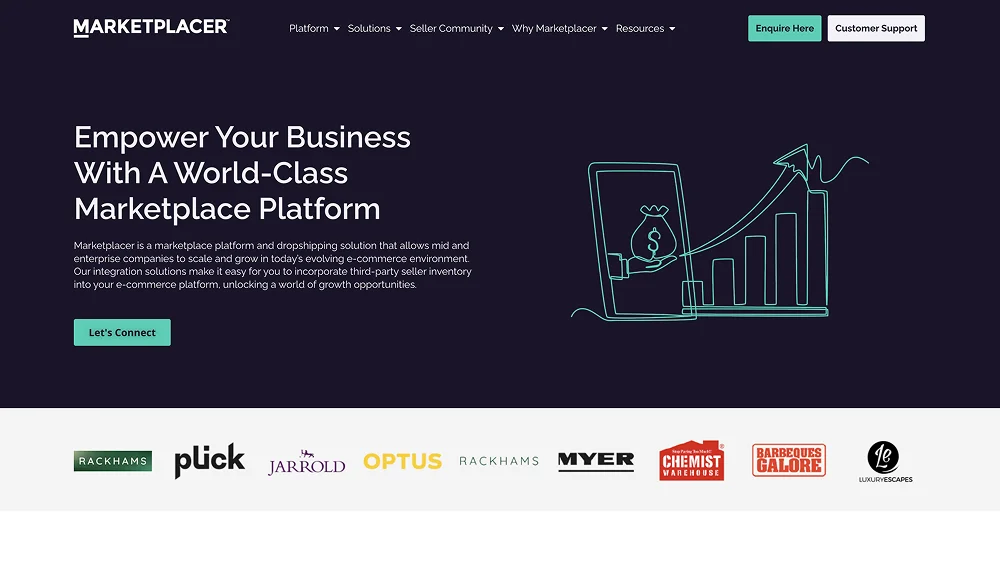
- Sample Success Story: In partnership with Marketplacer, a leading PaaS marketplace platform from Australia, Orient engineered a high-performance integration platform capable of bidirectional data synchronization between major commerce systems such as Shopify, BigCommerce, and Salesforce. The team designed and implemented a scalable architecture, carried out an in-depth analysis of Marketplacer’s core systems, and optimized third-party integration tools to ensure consistency, reliability, and ecosystem-wide compatibility. As a result, Marketplacer’s customers are now able to create, operate, and scale marketplaces more easily while seamlessly synchronizing product, order, and customer data with their existing commerce platforms.
Kyanon Digital
Founded in 2012 in Ho Chi Minh City, Vietnam, Kyanon Digital is a digital and technology company specializing in end-to-end software engineering and ecommerce development for clients across Asia-Pacific and beyond. The company positions itself as the trusted partner to make a digital impact, well known for its competitive pricing, agile delivery, and ISO-certified quality processes.
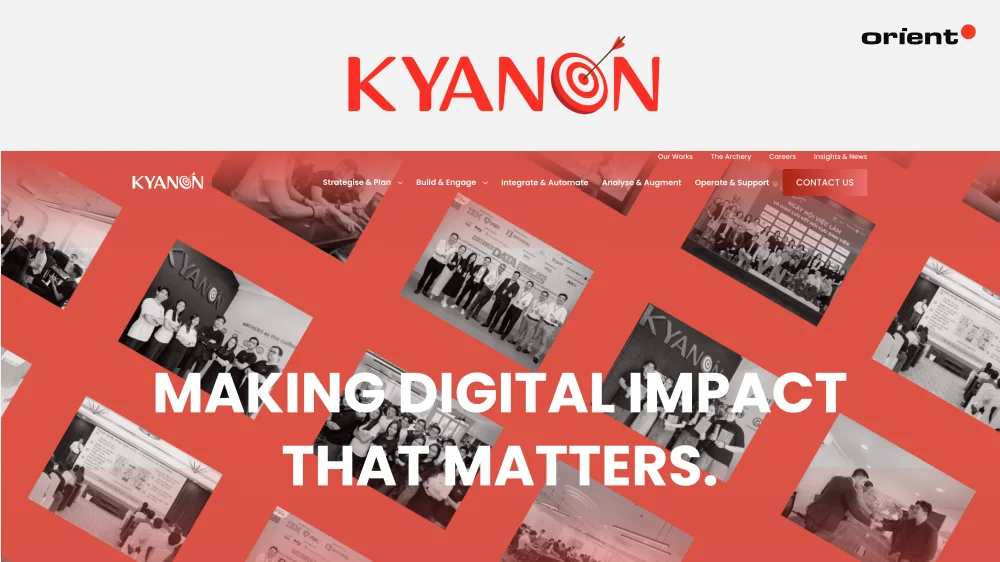
With over 13 years of experience, Kyanon now has offices in Vietnam, Singapore, Thailand, Australia, and Malaysia. The company has served 100+ clients, including Fortune 500 brands, and its ecommerce work ranges from building high-performance online stores to composable commerce architectures, integration with payment and logistics providers, and ongoing maintenance and optimization to support long-term digital growth.
- Min Project Size: $10,000+
- Team Size: 500+ professionals.
- Service Range: Strategise & Plan, Build & Engage (custom solutions), Integrate & Automate, Analyse & Augment, and Operate & Support.

- Sample Success Story: Coway, a global leader in water and air purifiers, partnered with Kyanon Digital to tailor a modern ecommerce system that serves as a central hub for its product sales and agent network. The solution combines a ReactJS-based storefront with a flexible admin portal, enabling Coway to manage products, content, orders, and promotions efficiently while delivering a fast, intuitive shopping experience for end customers. Behind the scenes, the platform is integrated with Coway’s agent management system to automate commission calculation and provide real-time visibility into sales performance. This product helps Coway streamline operations, support its sales force, and strengthen its digital presence in key markets.
Tigren
Unlike the two custom solution providers mentioned above, Tigren is a Vietnam-based e-commerce development company specializing in Magento, Shopify, and WordPress solutions. The company itself is known as a complete ecommerce project development partner.
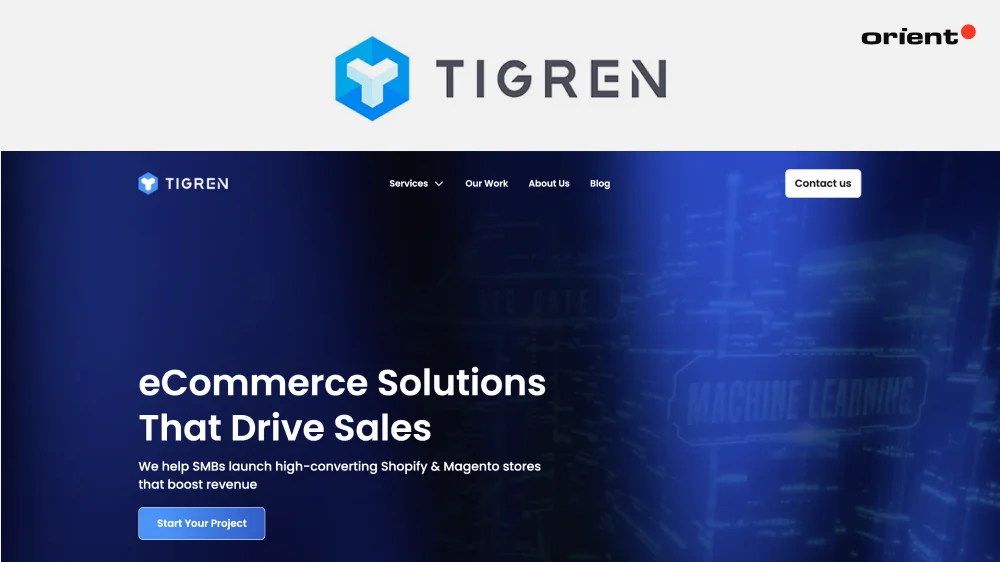
With over 13 years of experience, Tigren has delivered 500+ online stores and custom solutions and earned client satisfaction from SMBs and enterprises across the U.S., the UK, Australia, and other markets. The Tigren team focuses on custom ecommerce website development, progressive web apps, mobile commerce apps, and ongoing optimization services, combining modern UX/UI design with performance-focused engineering to create high-converting online stores.
- Min Project Size: $1,000+
- Team Size: 50+ talent.
- Service Range: Ecommerce website development, migration, and enhancement, UI/UX audit, and progressive web app development.

- Sample Success Story: One of Tigren’s success projects is Tiny Blessing’s fully functioning Magento 2 ecommerce site that sells high-end, customizable jewelry for babies and children. In this case, Tigren planned and executed a full migration process from Magento 1 to Magento 2. The ultimate goal was to protect the business from Magento 1’s end-of-life risks while preserving the original store’s design and brand look. The outsourced team reconstructed the entire store in Magento 2 without disrupting the original interfaces and user experiences. They reimplemented and customized the core business features, especially the personalized jewelry options (like engraving and charms). Moreover, they tailored the shopping cart to support gift cards, customer comments, and special offers. At the same time, they migrated all critical data (products, customers, orders), installed and configured key Magento 2 extensions to extend functionality, and integrated FedEx/USPS shipping and the First Data Global payment gateway.

Trung Tran
Technical/Content Writer
Trung Tran
Technical/Content Writer
Topic: